Friday, October 12, 2012

Monday, October 8, 2012
Semi-Final Audio Essay (Assignment #8)
Depending on where you are right now when you
are hearing this, there is at least one button on your clothing. To many, the
button is an apparatus, a simple solution to securing clothing in a particular
fashion. Despite this belief, the button has a hidden message. It provides a
way to express a more dignified version of the self, and also allows for
clothing to embrace the human form rather than merely hand over it.
If my sense of fashion is reasonable, I think
that it is safe to say that people do not pick out clothing items based on the
button sewn onto them. Why, then, would I attempt to construct an argument
defending their importance? An example would be, if an article of clothing is a
cupcake, and the material and stitching is the, "cake and frosting,"
the button would be the sprinkles. Sure, there aren't sprinkles on EVERY
cupcake, just like there aren't buttons on EVERY shirt or skirt or pair of
pants. The point is, when the "sprinkles" or any topping for that
matter are absent, just like a button, it says something about that cupcake or
clothing. Pants associated with having no button, at least what comes to my
mind, are usually athletic or pajama pants. Sure, many brands of "dress
pants" have a design that hide the front button, but it is pretty strange
when there isn't one on the back pockets (which makes little sense when you
consider how tight they are on the tush). In essence, when the
"toppings" or buttons are not present, it gives the impression that
there was some lack of effort on the creator.
Comparatively, the button is a seemingly pointless
add-on to clothing (when it doesn't serve a physical function), yet if it isn't
there we think it looks strange. It all comes down to what a button means to
us, whether it is a status statement or something more specific. The button is
as symbolic as a crucifix when you think about it; how they represent
industrialization, the more elaborate and expensive buttons represent wealth,
the circular versus the triangular, two holes versus four holes or no hole. The
further I delved into the question, “Why a button,” the more it became about
human beings and their peculiarities. It allows for clothing to better ride the
contours of the body while adding to the aesthetics of the clothing itself.
When my mother was younger, she felt an extreme aversion towards buttons, and
even today she gets uncomfortable around buttons that are unattached to
anything. This condition is called Koumpounophobia
and it is a very real thing, even the late Steve Jobs abhorred the harmless
little things. Perhaps it is in this fear of the button that we can uncover
their underlying importance.
When I
first discussed the fear of buttons with my mother, I unjustly mocked her and
others for having such a queer and nonsensical fear of them. Yet the more I
surrounded myself with the objects and pondered their ulterior purposes, I
found myself reflecting on my own bad experiences with buttons. I must have
been five or six years old and my mother was dressing us for a funeral. The
dress shirt she had scrounged up for me (presumably a hand-me-down from one of
my two older brothers) was not fitting correctly. I have always had a larger
than average neck and my mother struggled with the top button. After a few
minutes of fierce tugging, she united the top button with its hole, only to
leave the room abruptly to stop my brothers from fighting down the hall. What
she had not realized is that by forcing the button in its place she had
inadvertently cut off my air and blood supply. As many of you know, the top
button of a dress shirt is usually the most difficult to get on and off
regardless of the fit. I failed several times to free myself from the shirt,
only to lose consciousness as my mother returned. After that horrible
experience with buttons I noticed something about myself that I had ignored for
all these years. Following that incident, I stopped wearing jeans and Polos.
For almost six years. I asked my parents why they allowed me to wear sweatpants
and only regular t-shirts for so long and the only response I received was that
I would throw a fit if they tried to make me dress otherwise. Although I am
quite beyond this fear of buttons, the reasons behind that fear are significant
in that they explain why buttons are more than mere fasteners. My fear of
buttons is in the betrayal of their security. In other words, buttons symbolize
an embrace, liked arms reaching from behind and holding your clothes close to
your chest. When that button choked me, I lost the ability to find comfort in
their embrace. Sure, some buttons merely connect two sides and are often not so
lovingly snug, yet you feel different wearing a loose button up shirt versus a
loose t-shirt or sweater. Think of how a man would wear a tight-fitting button
up dress shirt during a formal occasion while the same man may wear a loose
“Hawaiian” shirt while on vacation or on a casual day. This idea of “high” button clothing and “low” button clothing are troubling to someone trying to convey a solid backstory for buttons. And yet, like many other fashionable objects, it is all about the trickledown effect of an item from expensive to affordable. A shirt with buttons on it is more expensive to create than a t-shirt, yet it is still reasonable enough that most people can afford a few of them. The interesting part, however, is that we still would view an individual that wore button-down shirts everyday differently than someone who wears them irregularly. Even if the t-shirts that the latter person wears cost more, we still see the person wearing the buttons to be of a “higher caliber”, or that they care more about their appearance or many other presumptions. I can relate to this idea as I have experienced the phenomena first hand. In high school, I would wear the flannel shirts you people sporting quite regularly these days. Although these shirts cost me around twenty dollars, many of my friends would remark on my shirt like I had something important to do after school. For some people, as I have come to realize, a button up shirt is their idea of formality. And so, despite the brand or material or design, the button is the formal aspect of the clothing. As for the “Hawaiian” shirt, it is still perceived to be more formal than a high quality t-shirt. In essence, the button has come to mean that the wearer cares about his or her appearance.
For over 5000 years we humans have been
incorporating buttons with our outfits, and only in the 13th century
did they begin to serve a technical function. How then, do I relate the
security of buttons to the time before they connected our clothing?
Anthropologists have studied these ancient buttons and have found that they
were almost always arranged in some pattern, often across the chest diagonally.
Even up until the 13th century we find that they were purely
decorative additions, that being in their placement or in the elaborate design
of each individual button. The connection still exists between these early and
modern buttons because, although they did not physically embrace us then, they
symbolized something about their heritage. The earliest button wearers shared a
common image by adorning these buttons diagonally, while the aristocrats of the
past embodied their family crests or culminated wealth in the buttons they
wore. Today, a tuxedo may have a few functional buttons to close the jacket,
yet cufflinks and buttons on fake front pockets are simply for decorative purposes.
Buttons have always held ties to a comforting confirmation, whether it is
status, the embellishing of the physique, or the gentle melding of opposing
halves of clothing, and today it is evident that buttons still serve purposes
that are both modern and ancient. It is my understanding, then, that buttons
have irrevocably made their mark on our fashion, and will continue to link us
to past generations and the all-encompassing question of what does it mean to
be human.
Monday, October 1, 2012
Audio Essay: The Button
Depending on
where you are right now when you are hearing this, there is at least one button
on your clothing. To many, the button is an apparatus, a simple solution to
securing clothing in a particular fashion. Despite this belief, the button on
your clothing may also play a significant role in the social push and pull
behind a particular outfit of yours.
If my sense
of fashion is reasonable, I think that it is safe to say that people do not
pick out clothing items based on the button sewn onto them. Why, then, would I
attempt to construct an argument defending their importance? For example, if an
article of clothing is a cupcake, and the material and stitching is the,
"cake and frosting," the button would be the sprinkles. Sure, there
aren't sprinkles on EVERY cupcake, just like there aren't buttons on EVERY
shirt or skirt or pair of pants. The point is, when the "sprinkles"
or any topping for that matter are absent, just like a button, it says
something about that cupcake or clothing. Pants associated with having no
button, at least what comes to my mind, are usually athletic or pajama pants.
Sure, many brands of "dress pants" have a design that hide the front
button, but it is pretty strange when there isn't one on the back pockets
(which makes little sense when you consider how tight they are on the tush). In
essence, when the "toppings" or buttons are not present, it gives the
impression that there was some lack of effort on the creator. Another example I
can propose is to think of eggnog without the signature, "pinch of
nutmeg," on top of it. Sure, the nutmeg has a slight effect on the taste
for the first few sips, but in the end it is kind of a meaningless addition to
the drink.
Comparatively, the button is a seemingly pointless
add-on to clothing (when it doesn't serve a physical function), yet if it isn't
there we think it looks strange. It all comes down to what a button means to
us, whether it is a status statement or something more specific. The button is
as symbolic as a crucifix when you think about it; how they represent
industrialization, the more elaborate and expensive buttons represent wealth,
the circular versus the triangular, two holes versus four holes or no
hole? The further I delved into the question, “Why a button,” the more it
became about human beings and their peculiarities. When my mother was younger,
she felt an extreme aversion towards buttons, and even today she gets
uncomfortable around buttons that are unattached to anything. This condition is
called Koumpounophobia and it is a
very real thing, even the late Steve Jobs abhorred the harmless little things.
Perhaps it is in this fear of the button that we can uncover their underlying
importance.
When I first discussed the
fear of buttons with my mother, I unjustly mocked her and others for having
such a queer and nonsensical fear of them. Yet the more I surrounded myself
with the objects and pondered their ulterior purposes, I found myself reflecting
on my own bad experiences with buttons. I must have been five or six years old
and my mother was dressing us for a funeral. The dress shirt she had scrounged
up for me (presumably a hand-me-down from one of my two older brothers) was not
fitting correctly. I have always had a larger than average neck and my mother
struggled with the top button. After a few minutes of fierce tugging, she
united the top button with its hole, only to leave the room abruptly to stop my
brothers from fighting down the hall. What she had not realized is that by forcing
the button in its place she had inadvertently cut off my air and blood supply.
As many of you know, the top button of a dress shirt is usually the most
difficult to get on and off regardless of the fit. I failed several times to
free myself from the shirt, only to lose consciousness as my mother returned.
After that horrible experience with buttons I noticed something about myself
that I had ignored for all these years. Following that incident, I stopped
wearing jeans and Polos. For almost six years. I asked my parents why they
allowed me to wear sweatpants and only regular t-shirts for so long and the
only response I received was that I would throw a fit if they tried to make me
dress otherwise. Although I am quite beyond this fear of buttons, the reasons
behind that fear are significant in that they explain why buttons are more than
mere fasteners. My fear of buttons is in the betrayal of their security. In
other words, buttons symbolize an embrace, liked arms reaching from behind and
holding your clothes close to your chest. When that button choked me, I lost
the ability to find comfort in their embrace. Sure, some buttons merely connect
two sides and are often not so lovingly snug, yet you feel different wearing a
loose button up shirt versus a loose t-shirt or sweater. Think of how a man
would wear a tight-fitting button up dress shirt during a formal occasion while
the same man may wear a loose “Hawaiian” shirt while on vacation or on a casual
day.
For over 5000 years we humans have been
incorporating buttons with our outfits, and only in the 13th century
did they begin to serve a technical function. How then, do I relate the security
of buttons to the time before they connected our clothing? Anthropologists have
studied these ancient buttons and have found that they were almost always arranged
in some pattern, often across the chest diagonally. Even up until the 13th
century we find that they were purely decorative additions, that being in their
placement or in the elaborate design of each individual button. The connection
still exists between these early and modern buttons because, although they did
not physically embrace us then, they symbolized something about their heritage.
The earliest button wearers shared a common image by adorning these buttons
diagonally, while the aristocrats of the past embodied their family crests or
culminated wealth in the buttons they wore. Today, a tuxedo may have a few
functional buttons to close the jacket, yet cufflinks and buttons on fake front
pockets are simply for decorative purposes. In essence, buttons have always
held ties to a comforting confirmation, whether it is status, group unity, or
simply the gentle melding of opposing halves of clothing, and today it is
evident that buttons still serve purposes that are both modern and ancient.
Wednesday, September 26, 2012
Draft of Audio Essay Script
Buttons: Why They Matter
Intro: Depending on where you are right now when you are hearing this, there is at least one button on your clothing. To many, the button is an apparatus, a simple solution to securing clothing in a particular fashion. Despite this belief, the button on your clothing may also play a significant role in the social push and pull behind a particular outfit of yours.
Thorax and Abdomen: If my sense of fashion is reasonable, I think that it is safe to say that people do not pick out clothing items based on the button sewn onto them. Why, then, would I attempt to construct an argument defending their importance? For example, if an article of clothing is a cupcake, and the material and stitching is the, "cake and frosting," the button would be the sprinkles. Sure, there aren't sprinkles on EVERY cupcake, just like there aren't buttons on EVERY shirt or skirt or pair of pants. The point is, when the "sprinkles" or any topping for that matter are absent, just like a button, it says something about that cupcake or clothing. Pants associated with having no button, at least what comes to my mind, are usually athletic or pajama pants. Sure, many brands of "dress pants" have a design that hide the front button, but it is pretty strange when there isn't one on the back pockets (which makes little sense when you consider how tight they are on the tush). In essence, when the "toppings" or buttons are not present, it gives the impression that there was some lack of effort on the creator. Another example I can propose is to think of eggnog without the signature, "pinch of nutmeg," on top of it. Sure, the nutmeg has a slight effect on the taste for the first few sips, but in the end it is kind of a meaningless addition to the drink. Comparatively, the button is a seemingly pointless add-on to clothing (when it doesn't serve a physical function), yet if it isn't there we think it looks strange. It all comes down to what a button means to us, whether it be a status statement or something more specific. When my mother was younger, she felt an extreme aversion towards buttons, and even today she gets uncomfortable around buttons that are unattached to anything. This condition is called Koumpounophobia and it is a very real thing, even the late Steve Jobs abhorred the harmless little things. Perhaps it is in this fear of the button that we can uncover their underlying importance. The button is as symbolic as a crucifix when you think about it; how they represent industrialization, the more elaborate and expensive buttons represent wealth, the circular versus the triangular, two hole versus four hole or no hole?
This is a basic draft of the body but I'm holding off on tying it to the conclusion just yet. I appreciate any input for what I have so far!
James
Wednesday, September 19, 2012
The Button: A Fastener From Our Ancestors
Buttons
As one of the most identifiable features on clothing and common apparel, the button is ( for the most part) a genderless device used for attaching fabrics. In addition to its technical function, it serves a social function as a decorative addition to a fashionable object.
 |
| "Dude. I lost my button right in the middle of that epic battle we had with the Wooly Mammoths!" |
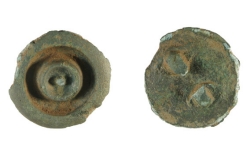
In pondering the button, along with extracurricular research, I arrived at the suspicion that there is much more to this curious little appendage on my waistline. Why, in this day and age, have we not ousted the lowly button for a more technologically advanced substitute? How can something so simply constructed be so incredibly endearing? According to An Encyclopedia of the History of Technology, the oldest artifact to be identified as a button was found at Mohenjo-daro (Indus Valley) and is confirmed to be around 5,000 years old. In an age when our technology becomes outdated within a year of its genesis, it is difficult to not be impressed with the timelessness of the button. But what does this mean in regards to fashion?
 | |
| Probably wouldn't find these on boxer shorts. Just saying. |
Interestingly enough, buttons were originally for decorative purposes only. According to Jude Stewart, author of the article, "The Simple, Humble, Surprisingly Sexy Button," it was not until the mid-13th century in Germany did buttons begin to fulfill an actual function for clothing. In that fact, it is safe to assume that buttons can be credited as a fundamental aspect of fashion's early origins. This goes along with Lars Svendsen's, "The Principle of Fashion: The New," in that fashion (as we know it today) originates in the late medieval period. Although the button has existed for a much longer time period, the idea that it was used for the sake of "fashion" is misguided at best. In Svendsen's words, the presence of fashion cannot be defended as there, ". . . was no individual aesthetic autonomy in the choice of clothing - even though there were certain possibilities for variation."
Despite this philosophical technicality, the button still existed before it became an element of fashion. The importance of the button, then, derives from its attractiveness to humans outside the realm of fashion sensibility. Today we view the button as an assistant, a compliment to the design of our garment, even a political or personal statement. Tuxedos, at least in my experience, seem to be one of the worst violators of the functional button. While some of the buttons may close the two sides of the jacket, "functionless" buttons adorn the "functionless" front pockets of the tuxedo. In the past I was perplexed by these seemingly frivolous additions to the clothing and, as many men do, I questioned whether or not this was a typical example of human excess and waste.
 | |
| Fashion Police: Would they be mostly men or women? |
What I have come to realize since then, with a little help from Jennifer Kontny's class on the Rhetoric of Fashion and Design, is that these seemingly useless additions tell us much about what the inner workings of fashion are all about. The button on my pants is there to keep prying eyes from seeing my unmentionables (how arrogant of me to use "prying" instead of "innocent", no?), but it would also be kind of strange to see someone wearing blue jeans without a visible button holding them taut around the waist (or buttocks, I try not to judge). These fashion "norms" that are expected in some of our clothing are much more than that, they are testimonies to fashions of times long past. As I have previously mentioned, buttons are found around the world as relics, while others are attached to your clothing right now. I guess the point I am trying to make here is that there are some elements of fashion that defy the supposed principle of fashion, which is that the new replaces the old. The problem with that, as Svendsen identifies, is that we reach this point where the "new" is more of a twist on the old rather than something completely original. This is similar to Jukka Gronow's, "Philosophical Aesthetics and the Refinement of Taste," where she discusses the commonalities of food and fashion. The comparison of gourmet food and the advanced levels of culinary art with the similarly stratified levels of fashion is exemplary in that it breaks down two social institutions in a way that allows one to view them from an extrinsic perspective.
The button, too, exists in high and low forms. The material used, the complexity of design, and the placement on another object projects a particular image in the visual field of social interaction. A plastic button may say nothing, simply because it is not noticed or because it is so common, but a porcelain button elaborately hand-painted and placed in showy fashion about the chest or shoulder may say something about the personality, wealth, or even the self-esteem of the individual wearing it. All in all, the button is an important and intriguing part of our fashion history, and perhaps it may spark your attention next time you encounter one.
James Clarke Elliott
Wednesday, September 12, 2012
Fashion & Design
What is Fashion and Design . . . to Me?
In my opinion, fashion is the skin you choose, as opposed to what your born with. It is a person's desired projection of themselves, at times effort-full and others effortless. Coco Chanel describes it as, ". . . in the sky, in the street, fashion has to do with ideas, the way we live, what is happening." I agree with this definition of fashion because she suggests that it is a natural thing versus George Bernard Shaw's idea that, "A fashion is nothing more than an induced epidemic." Design, on the other hand, is more of a practice than a projection, though it could definitely be both.
Design, in the words of Charles Eames, "[. . .] is a plan for arranging elements in such a way as best to accomplish a particular purpose." I share this interpretation of design because it not focused on aesthetics in the same way as fashion. If fashion is a heavyset woman, design would be a chiseled triathlete. It is as much about function as it is efficiency, and it could be considered a fundamental aspect of fashion in some cases.
In my experience thus far with visuality and other aspects of fashion and design, I have come to believe that this form of stimuli holds foundational importance in the question, "What is a human?" I feel that my current perspective of fashion and design is rooted in the evolving trends that I have witnessed over the past two decades. In addition, my outlook on life has had a substantial influence on how I treat my own fashion and in how I perceive the fashion of others.
In my experience thus far with visuality and other aspects of fashion and design, I have come to believe that this form of stimuli holds foundational importance in the question, "What is a human?" I feel that my current perspective of fashion and design is rooted in the evolving trends that I have witnessed over the past two decades. In addition, my outlook on life has had a substantial influence on how I treat my own fashion and in how I perceive the fashion of others.
Until next time
James Clarke Elliott
Tuesday, September 11, 2012
A Brief Waft of James Clarke Elliott
First off, blog virginity officially lost.
Now that a minor confession has been made, let us begin to construct an elementary definition of who I am.
I am a natural born citizen of the United States, born and molded in the Milwaukee area. I come from a middle class background, although sometimes I feel that there should be a better classification system for my position in the social hierarchy than "middle class". Anyway, I have been alive for 20 years, 11 months and 11 days (not counting past lives). In the duration of this period, I have done very little that I would consider truly interesting other than my first year of college. Following my senior year, I enrolled at the University of Anchorage Alaska (UAA), where I lived with an older woman a mile from campus. The time I spent in Alaska quintupled my love for nature, expanded my perception of the world, and provided me the opportunity to start a new life. Leaving UAA was one of the more difficult "swallowing of pride" moments in my life as costs forced me to take a hard look in the mirror. This year will begin my second away from AK and third in college. To conclude this snippet, I will admit to having an immense affinity for English and literature, an irrevocable bond with nature, and unwavering respect for the creators of art in all its forms.
Slán go fóill (Oh yeah, I'm learning Irish/Gaeilge)
James Clarke Elliott
Subscribe to:
Posts (Atom)